
Yarrow — Protector of Boundaries
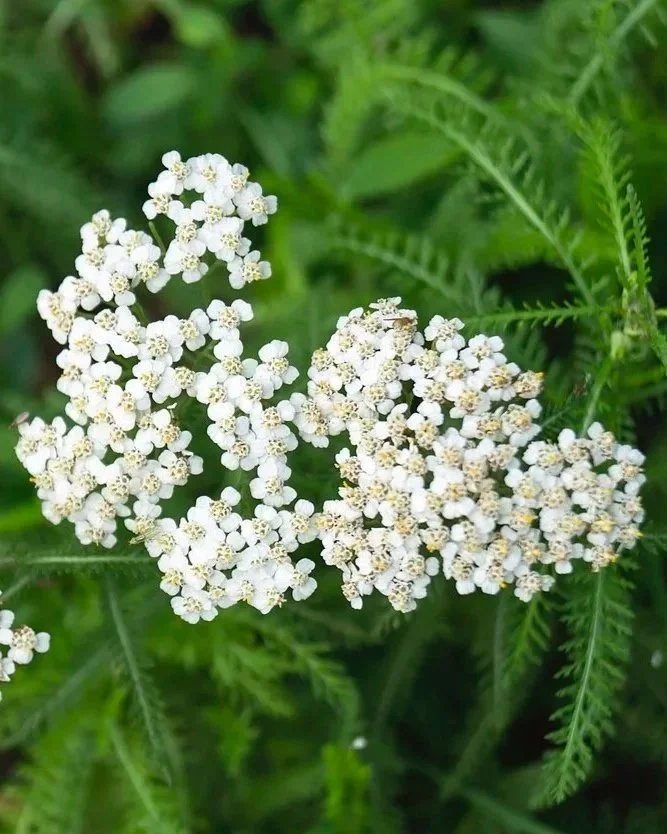
Botanical Name: Achillea millefolium
Herbal Actions: Diaphoretic · Astringent · Anti-inflammatory · Anti-spasmodic · Antimicrobial · Antiseptic · Nervine
Chakra Energy: Solar Plexus · Third Eye
Parts Used: Leaf · Flower
Concoctions: Tea Blends · Tinctures · Infused Oils · Salves · Poultices
Allies: Tea Blends — Elderflower · Peppermint · Chamomile · Fennel · Marshmallow Root, Healing Poultice — Calendula · Comfrey, Tincture — Skullcap
Yarrow blooms in many colors — from wild white and soft pink to deep red, purple, and bright yellow varieties. While white Yarrow has traditionally been most associated with herbal medicine and wound care, each color carries its own unique qualities, symbolism, and relationship to healing.
(More about the different colors of Yarrow and what they offer.)
Yarrow’s delicate clusters of flowers rise above feathery leaves, appearing almost cloudlike in the wind — yet beneath this gentleness is a plant long associated with boundaries, discernment, and healing after injury. Its botanical name, Achillea millefolium, traces back to the Greek warrior Achilles, who was said to use the plant to tend the wounds of soldiers during the Trojan War. Valued for its wound-healing properties, Yarrow has been carried into battlefields, tucked into medicine bags, steeped into teas for fevers, and used for centuries to help tend physical wounds. Across many traditions, Yarrow became known not only for wound care, but for helping the body respond wisely during times of stress, infection, or overwhelm.
It seems part of its medicine has always been about helping us heal the places where our boundaries have been breached — physically, emotionally, and energetically.
And perhaps this is part of Yarrow’s deeper teaching.
Yarrow is often considered an herb of energetic boundaries and the third chakra (solar plexus) — especially for those who feel deeply, sense the emotions of others quickly, or find themselves easily overstimulated by the world around them. In this way, it has long been associated with sensitive nervous systems and those who move through life highly attuned to both inner and outer environments. For anxiety rooted in overstimulation, emotional overwhelm, or feeling energetically “too open,” Yarrow may offer grounding through containment rather than shutdown — a gentle support for remaining open without absorbing everything around you.
Dried Yarrow stalks have been used ceremonially and symbolically throughout history. The stalks were traditionally used in I Ching divination practices, where the plant became associated with contemplation, wisdom, and listening beneath surface noise, the sixth chakra (our third eye). There is something fitting about this — a plant that supports both discernment and healing.
From a physiological perspective, Yarrow contains volatile oils, flavonoids, alkaloids, and bitter compounds that support circulation, digestion, inflammation regulation, and the nervous system. As a diaphoretic herb, it is traditionally used to encourage sweating during fevers, helping the body regulate temperature and support immune response. Its astringent properties help tone tissues, while its anti-spasmodic actions may help soften tension held in the digestive tract, muscles, or nervous system itself.
Yarrow’s nervine qualities feel subtle but steady. Not sedating in the way some herbs are — but clarifying.
Yarrow offers a quiet reminder to return to center.
To notice what belongs to you…
and what does not.



The leaves and flowers are edible and have a fresh, peppery flavor reminiscent of watercress, mustard, or radish. The flowers are beautiful scattered over salads, while the young leaves can be added to sandwiches, chopped into savory dishes, or blended into pesto.