
Elder - Wise Mother
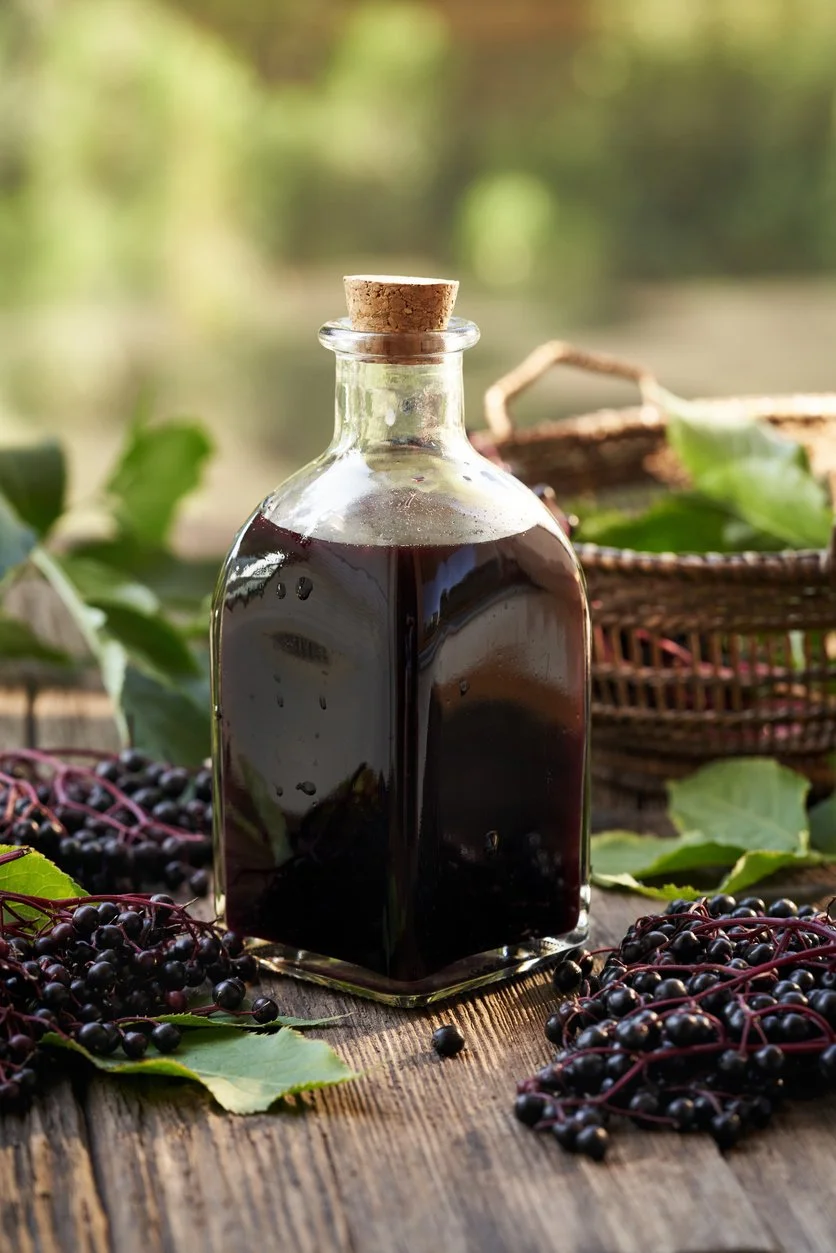
ElderFlower: respiratory Support
Botanical Name: Sambucus Genus
Planetary Energies: Venus, Jupiter
Chakra Association: Root
Herbal Actions: diaphoretic, anti-inflammatory, anti-oxidant, diuretic, expectorant, anti-cattarrhal
Parts Used: Flower
Concoctions: Tea, tincture, oxymel, liqueur, syrup
Elderberry: Immune Support
Botanical Name: Sambucus Negra
Planetary Energies: Venus, Moon
Chakra Association: Throat
Herbal Actions: diaphoretic, anti-inflammatory, expectorant
Parts Used: Ripe Berry
Concoctions: Syrup, electuary, decoction, tincture, tonic
Elder has long been known as the Wise Mother—a guardian plant woven through folklore, medicine, and myth. Across many cultures, Elder has been associated with sorrow, death, deep magic, and transformation. In Scandinavian tradition, the tree was believed to be inhabited by Hyldemoer, the Elder Mother, who required respect and permission before her blossoms or berries were taken. In Christian lore, Elder wood is said to have formed the cross of Jesus, linking the tree with sacrifice and transformation. In medieval Europe, Elder was planted near homes for protection—once thought to ward off witches and spirits, a role we might now recognize as protection against illness. In Celtic tradition, Elder is associated with Samhain, honoring death, rebirth, and the threshold between worlds.
For centuries, both the flowers and berries have been used as gentle yet powerful allies, supporting circulation, immunity, the respiratory system, and the body’s natural processes of cleansing and renewal. Equally important was how Elder was approached. Across many European folk traditions, it was never treated as a casual harvest plant, but as one of relationship and respect. Before gathering elderflower or elderberries, people would pause, touch the tree, and ask permission—sometimes silently, sometimes aloud—acknowledging what was often called the Elder Mother. A small offering might be left in return, reinforcing reciprocity rather than taking.
Timing mattered. Elderflower was traditionally gathered on dry, sunny days after the dew had lifted, when the blossoms were fully open. Elderberries were harvested only when deeply ripe—dark purple to black, never red. Taking too early was believed to weaken the medicine. Just as importantly, harvesters were taught to take only what was needed, always leaving enough for the tree, the birds, and the land.
These teachings weren’t superstition so much as embodied wisdom: listen first, wait for readiness, and trust that medicine works best when it is invited rather than forced.
Elder — Flower vs. Berry
Though they come from the same plant, elderflower and elderberry offer very different medicine, each aligned with a distinct phase of support.
Elderflower is light, aromatic, and opening. It gently encourages circulation and lymphatic flow, helping the body release congestion—physical, emotional, or seasonal. Traditionally used at the earliest signs of imbalance or during times of heaviness and transition, elderflower supports a soft exhale rather than a forceful response.
With cooling-to-neutral energetics, it can ease sinus pressure, mental fog, and the muted, cloudy quality of low‑grade anxiety. Most often enjoyed as a tea or infusion, pairs with lemon balm for anxiety, chamomile for softness, or linden for heart support. Elderflower is meant to be sipped slowly, allowing the body to open and clear in its own time. This is not an herb of force, but of timing—it works best when listened to early, when the body is whispering rather than shouting.
Elderflower teaches that release does not require struggle.
Some things loosen simply by being met with kindness.
What signals has my body been offering quietly?
Elderberry, by contrast, is dense, grounding, and fortifying. The cooked berry is rich and nourishing, traditionally used when immune demand is higher—during active illness, after exposure, or in recovery. With warming energetics, it supports the body’s ability to build strength and mount a defense, making it better suited for later stages or times of depletion rather than the very beginning of symptoms.
Elderberry feels like being wrapped in something steady and warm. Where elderflower opens, the berry gathers—meeting the body when reserves feel low and support is needed. Historically used during illness and recovery, it helps the body respond and rebuild without urgency or force.
Together, elderflower and elderberry reflect a natural rhythm: first opening and release, then building and protection. Elderberry reminds us that rest and strength belong together—rebuilding is not weakness, but wisdom.
Elderberry is most often prepared as a syrup or decoction and pairs well with ginger, cinnamon, or clove for warmth and circulation, or rosehips for added nourishment. Use during immune demand or recovery, not at the very first whisper of imbalance.
What kind of support would feel truly strengthening right now?
You do not need to push.
A gentle opening is enough.


Humans question things. We wonder why something happened, what something means, whether what we have been told is true, and sometimes even about the nature of reality itself.