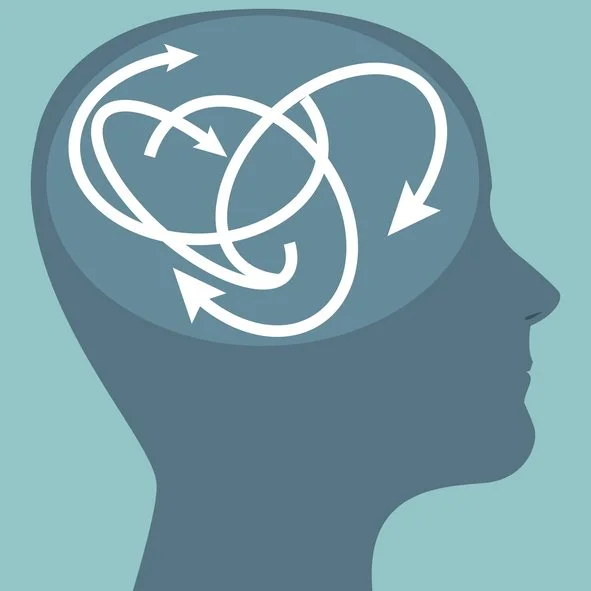
The Worry Circuit’s Role In Anxiety
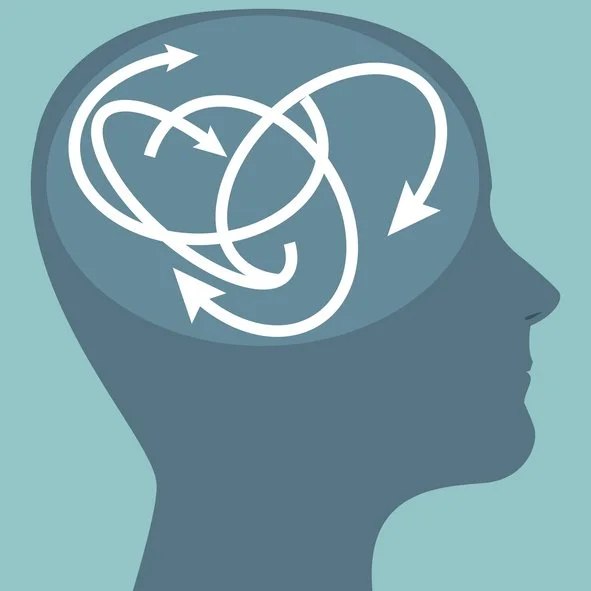
Anxiety is the brain’s natural way of responding to disruptions in our reality—both external and internal.
Let’s approach this from the perspective of “anxiety” being a word that describes an experience in the body and mind, not a label of one’s mental well-being. On most occasions, this activation of symptoms of anxiety are due continuous loops of worrying.
We all hold within our brains a physical, real neural pathways, often referred to as the worry circuit, which plays a central role in how anxiety takes hold. There are three main areas involved in this circuit, although several other structures also contribute to how anxiety is experienced in the body.
It is helpful to know that this system is designed to protect you. To help you anticipate danger and quickly and intelligently respond.
Anxiety is what it can feel like when this system stays active for too long
or struggles to find resolution.
What is worry?
Worry is a cognitive process focused on potential future threats.
It often shows up as:
What if…
I should have…
I shouldn’t have…
Am I and my loved ones safe…
These thoughts can run quietly in the background or loop throughout the day, week, month.
A healthy worry process
A concern arises.
A plan is made.
Action is taken.
The system returns to ease.
When the loop gets stuck
A concern arises.
A plan is made… but then questioned.
Doubt leads back to worry.
Or:
Action is taken,
but the mind returns to second-guess.
This creates a loop that prevents resolution and keeps the system activated.
What we feel in the body
When caught in this loop, you may notice:
clenched jaw
tightness in the neck, chest, shoulders, hips
upset stomach or acid reflux
a fluttering sensation in the gut
a racing heart or change breathing pattern
difficulty thinking clearly
blurred or narrowed vision
fatigue or even exhaustion
These sensations are part of the body’s stress response, activated by the brain.
Structures involved
The amygdala
The worry and fear center. It acts as an alarm system, detecting potential danger and triggering the fight-or-flight response. When overactive, it can heighten feelings of fear and worry.
The prefrontal cortex (PFC)
The rational part of the brain that works to regulate and calm the amygdala. When weakened by stress, it may struggle to override these fear responses.
The thalamus
A relay center of the brain, directing information between different regions.
The striatum (part of the basal ganglia)
Involved in movement, motivation, and decision-making. It also plays a role in habitual thought patterns. When worry becomes repetitive, this area can reinforce the cycle.
The hypothalamus
Activates the body’s stress response, releasing hormones like cortisol and leading to physical changes such as increased heart rate and blood pressure.
The hippocampus
Processes and stores memories, helping assess whether a situation is truly dangerous or connected to a past experience.
The core of the worry circuit
The prefrontal cortex, striatum, and thalamus form the core of the worry circuit, also known as the CSTC loop (Cortex–Striatum–Thalamus–Cortex).
This represents the path the signal takes:
The prefrontal cortex receives the worrying thought
The striatum evaluates whether to act
The thalamus filters the information and determines whether it feels like an immediate threat
If unclear, the signal is sent back to the prefrontal cortex, continuing the loop until resolution is reached
How the loop unfolds
Worry may begin in the amygdala, often in response to an external trigger.
The amygdala communicates with the prefrontal cortex, looking for evaluation.
To make sense of the situation, the prefrontal cortex consults the hippocampus for stored memories.
It then sends information to the striatum to help determine whether action is needed.
All information passes through the thalamus.
If a threat is perceived, the hypothalamus activates the stress response—fight, flight, or freeze.
This is when we begin to feel the physical sensations of anxiety.
If the message remains unclear, the loop continues.
(This is one way anxiety can begin. Other times, the body speaks first—
and the mind tries to catch up. More on this to come)