
Winter Solstice - A Turning Point of Darkness, Light, and Deep Listening
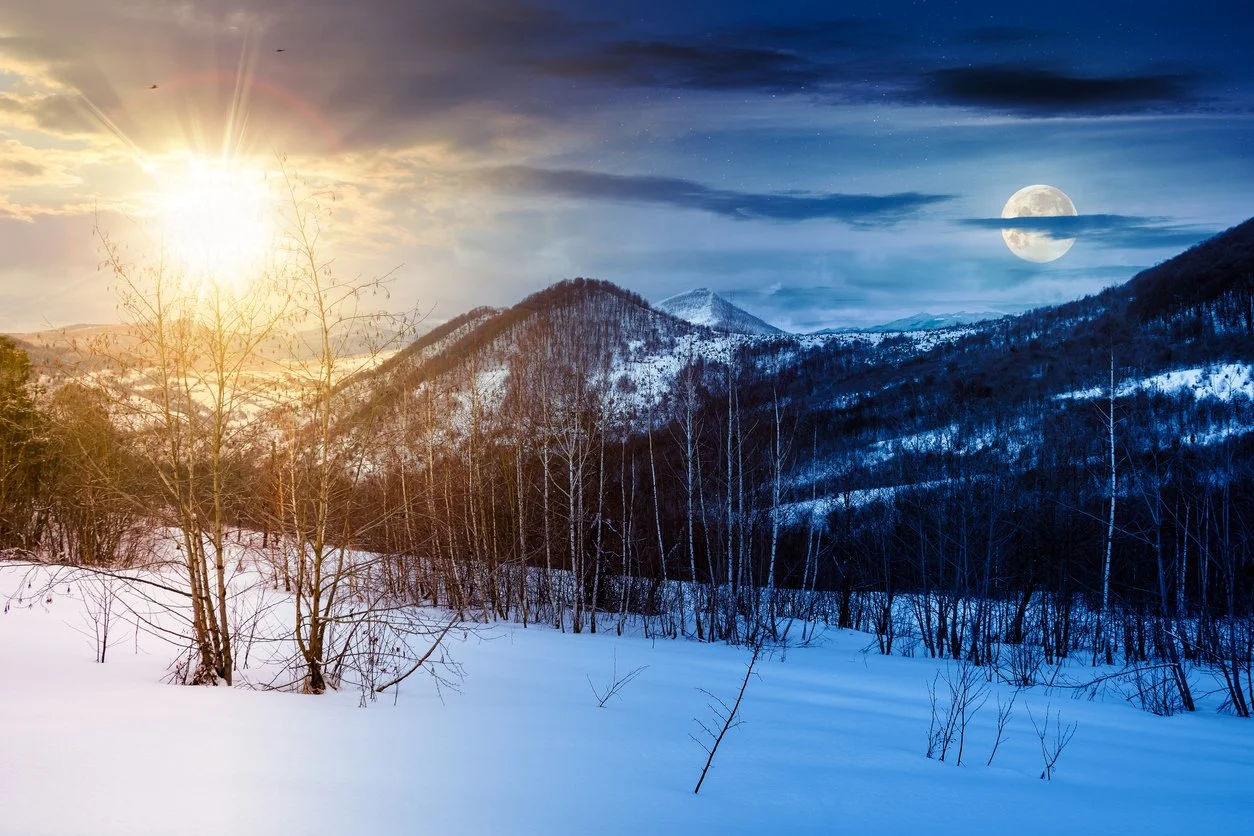
Winter Solstice has been honored for thousands of years because it marks a precise and powerful moment in the earth’s rhythm—
the shortest day and the longest night of the year.
We often hear that day and night are “equal,” but the Solstice is actually when the Northern Hemisphere leans farthest away from the sun. This tilt creates:
the least amount of daylight,
the deepest stretch of darkness,
a sense that the whole world has exhaled.
And then — almost imperceptibly — the very next morning, the light begins to return.
This slow shift toward longer days is why ancient cultures treated the Solstice as sacred: a hinge between endings and beginnings, a reminder that renewal often starts quietly, in the dark.
Because the return of light was essential for survival, the Solstice was seen as:
The rebirth of the sun
A promise that spring would eventually come
A time to honor darkness before inviting increase
A season for reflection, storytelling, divination, and tending the hearth
Across Ireland, Scotland, and England, ancient peoples built stone monuments — Newgrange, Maeshowe, Stonehenge— with astonishing precision. These structures were aligned so that only on the morning of the Winter Solstice would a narrow beam of sunlight reach their deepest chambers.
For the rest of the year, these chambers remained completely dark.
Their builders understood something modern people often forget:
the body and the earth both shift in response to the seasons.
As the days shortened and darkness deepened, the body naturally slowed:
Darkness became a signal to pause, not a threat.
The body dropped into repair, digestion, and reorientation.
And when the light returned, it did so gradually — giving the nervous system time to rise gently, not abruptly.
This inward rhythm mirrored the land itself.
Winter was a season of listening, not rushing — a time to trust what was happening beneath the surface.
Symbolically, this moment carried the meaning that illumination often follows deep stillness — just as insight arises in us after periods of rest and inwardness.
The Solstice sunrise entering those stone chambers was a yearly reminder that clarity emerges slowly, only when the time is right.
Of course, we don’t need to build a massive stone circle to honor this moment of the year. Our ancestors expressed reverence with monumental architecture because they were marking a turning point their survival depended on.
Today, we can honor the Solstice in far simpler ways — with quiet, with intention, with a single flame, or with a mindful breath.
Winter Solstice Ritual — Welcoming the Returning Light
1. Dim the lights
Let the room mirror the season — soft, quiet, unhurried.
2. (Optional) Cleanse the space with smoke
Burn a bit of garden sage or another herb you feel connected to.
Let the smoke drift gently as a way of clearing the old year and inviting stillness.
3. Light a single candle
Not to brighten the room, but to symbolize the first thread of returning light.
4. Create a simple stone circle (optional)
Place crystals or small stones in a gentle ring around the candle.
This echoes ancient stone circles — not for grandeur, but for intention, steadiness, and alignment.
5. Hold or sip sage tea
(or place a sage leaf nearby) to invite clarity, warmth, and grounding.
6. Take 3 Breaths
Inhale gently, exhale long.
Feel your body settling into winter’s natural pause.
OR practice Spiral Breath
7. Ask inward:
What is ready to rest?
What wisdom is rising quietly within me?
What truth feels easier to hear in the dark?
8. Close with a hand on the heart & Whisper:
“I welcome this darkness and the coming of the returning light — within me and all around me.”


Humans question things. We wonder why something happened, what something means, whether what we have been told is true, and sometimes even about the nature of reality itself.