
When I slowed down enough to listen this morning, it wasn’t my thoughts that spoke first — it was my body. A familiar tightness deep in my hips, especially on the left. I could trace the tension up along my lower spine. The psoas. A place I’ve learned to associate with vigilance and holding.
As I stayed with the sensation, a feeling emerged beneath it: fear. Not abstract anxiety, but something very real and present.
The storm.
The rain.
The wind.
The wind had been strong through the night — loud enough to wake me, loud enough that my body stayed alert even while resting. Heavy gusts, sudden thuds, the unmistakable sound of large limbs breaking and falling somewhere in the dark. Each crack carried information: pay attention, be ready.
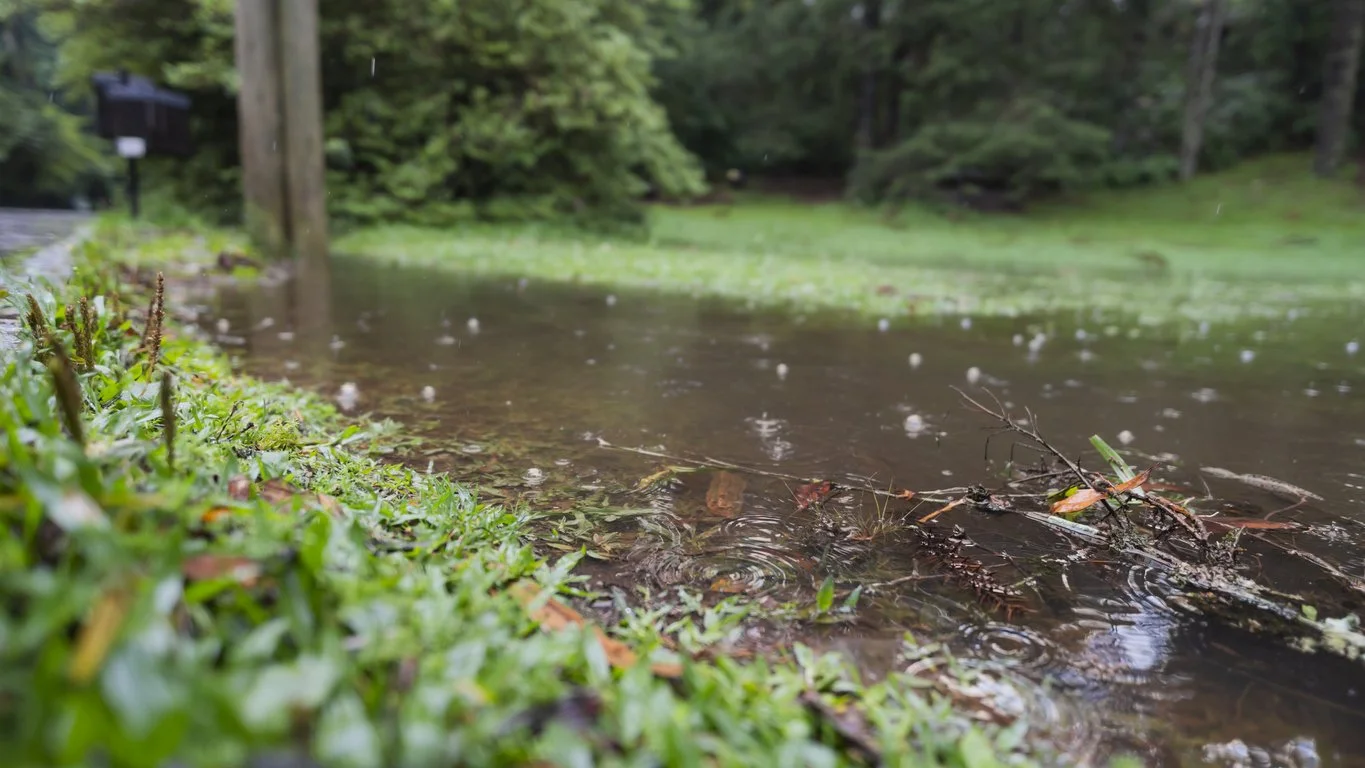
I live in a place where flooding is possible, and where trees are both shelter and risk. While I did what prep work I could — clearing drainage — others downstream did not. Water rose into my front yard, and created a pond in the road that inhibits crossing, escaping.
In recent weeks, I had made a decision about the trees on the hill behind my house — choosing to have their limbs cut back, rather than touching the redwoods that tower around my home. A practical decision. A respectful one. And still, my nervous system had been tracking the weight of it: responsibility, consequence, and the quiet question of whether I had chosen well.
What I noticed was how much of my body’s tension was tied to caretaking. Watching. Monitoring. Preparing. Holding responsibility not just for myself, but for my daughter, pets, home, and land. The familiar maternal posture of staying alert so nothing is missed — something I have done since I was a little girl, mothering myself.
My body had been tracking all of this quietly.
I talked myself into a yoga practice — something I knew could help release what was being held. As my psoas softened, nausea surfaced, a reminder that when long‑held vigilance begins to unwind, it doesn’t always feel gentle at first. This wasn’t panic. It was the body letting go of a role it had been gripping tightly: protector, organizer, watcher.
And then, slowly, I began to sense a quiet calm.
Not because the storm had passed, but because I could finally name what my body had been carrying.
This wasn’t my body being dramatic.
It wasn’t anxiety out of nowhere.
It was intelligence — responding to uncertainty, responsibility, and the instinct to keep what I love safe. And suddenly, the mood I’d been moving through that morning made sense: the short temper, the low frustration threshold, the subtle edge I hadn’t been able to explain.
Listening didn’t make the storm disappear. But it did allow me to soften out of constant readiness and brighten my mood a bit.
And in that moment, I felt the difference between being responsible and being over‑responsible — between care that nourishes and care that exhausts.
My system could finally settle once it was truly heard.
This is the place where gentle movement becomes less about fixing and more about listening. In the calming practice below, I share a simple psoas‑supportive yoga sequence and a guided rest designed to help the body feel safe enough to release — not all at once, but just enough.

The leaves and flowers are edible and have a fresh, peppery flavor reminiscent of watercress, mustard, or radish. The flowers are beautiful scattered over salads, while the young leaves can be added to sandwiches, chopped into savory dishes, or blended into pesto.